
Outdoor Activities in Beijing

Kite flying
A major hobby among gents of all ages, especially popular on public holidays when the skies above the city’s parks and squares are crowded with fluttering birds, dragons, lions, and laughing Buddhas.
Mahjong
Like gin rummy it’s all about collecting sets or runs to score points, only mahjong uses tiles, not playing cards. A visit to any Beijing park will invariably be sound tracked by the rat-a-tat of slammed pieces.
Street dancing
Ballroom dancing is hugely popular with the elderly, but in Beijing it doesn’t take place in ballrooms but out on the street. On warm evenings, car parks and sidewalks are filled with dancers congregated around a boom box. At the Workers’ Stadium you can get up to four different groups on the forecourt in front of the north gate – choose your style: waltz, polka, foxtrot, or gavotte.
Jianzi
Western kids play it with a football, passing the ball around with head, knees, and feet, the idea being not to let it touch the ground; the Chinese have their own version playing with what resembles a large plastic shuttlecock. It’s called jianzi and it is something of a national obsession, played by young and old alike, male and female.
Tai chi
Looking to improve the flow of qi (life force) through their bodies, early each morning crowds of mostly elderly people gather in Beijing’s parks to indulge in mass movements of tai chi, or tai ji quan as it’s better known in China. Although the discipline has its origins in martial arts, for most folks it’s more about making sure that the joints don’t seize up.
Yang Ge Dancing accessorized with brightly-colored, silk fans (an art known as yang ge) is popular with middle-aged ladies. It incorporates stylized movements derived from folk dancing.
Bird fancying
The Chinese have never been great keepers of pets. The exception has been the keeping of caged songbirds, which is a time-honored hobby. The birds are often taken to the park by their owners and hung in the trees to provide a sweet soundtrack to casual socializing.
Water calligraphy
Using a mop-like brush and a bowl of plain water, characters are painted on the sidewalk. Once dry, the characters disappear. It is supposed to exercise the mind and body. Tossing coins into the bowl will not be appreciated.
Qigong
Qigong combines breathing exercises, movement and meditation to positively channel body energy, or qi. Its adherents claim that regular practice can prevent illness and reduce stress.
10 Famous Parks in Beijing

Bei Hai Park
Classic ornamental gardens with a large lake for boating.
Chaoyang Park
The largest afforested park in Beijing, with well maintained flower and grass areas.
Di Tan Park
Large green spaces and cypress trees, and the striking Temple of Earth.
Xiang Shan Park
An hour’s drive northwest of the center but worth it for thickly wooded slopes dotted with pavilions
Grand View Garden
A park created for a hit TV series complete with pavilions, lake, and zigzag bridge.
Jing Shan Park
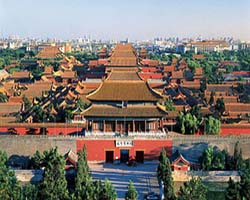
A hilly park with a pavilion providing views of the roofscape of the Forbidden City to the south.
Long Tan Park
Lots of lakes, a kid’s amusement park, and an enchanting water-screen show.
Ri Tan Park
One of Beijing’s oldest parks, with an altar for imperial sacrifice.
Temple of Heaven Park
Historic structures and a vast expanse of well-tended gardens, including a rose garden
Zhong Shan Park
Just outside the walls of the Forbidden City, Zhong Shan offers a respite from the crowds
Things To Do Before You Travel
When we travel, it is all going to be about ourselves being surrounded by a completely different environment, all by ourselves. Even if you travel with other people, you have to rely on yourself more than on anyone else. Besides, you’ll be outside of your comfort area. This is the main reason why certain things have to be taken care of in advance.
Manage Your Money
It is important to go to your own bank and withdraw money before leaving, so that you won’t arrive short on cash forcing yourself to struggle to find an ATM machine as soon as you arrive. Money belts are a good choice for travelers. You won’t even feel them, and your money will be safe with you while you travel, allowing you to sleep during your flight. This is also important in order to avoid expensive fees at machines that are not run by your own bank.
Write a “to do” list
You must do research on the city where you are travelling, so that you find the spots you want to hit. If you do this at home, you will save a lot of time. Try to dedicate one day to each place you want to visit, so that you don’t have to be rushing. Printing a map and highlighting all these places is a good idea, even if you have a smartphone! Paper is always a good backup.
Learn the Foreign Language
You don’t need to become a native 2 months before travelling, but learning at least the basics is definitely a great idea. When taking Chinese classes Toronto students aim at learning expressions like “Hello, I come from Canada”, “Excuse me, where can I find the nearest restroom?”, “Thanks for your hospitality”, and even “Excuse me Sir, do you speak English?”. Many visitors take English classes Washington after realizing how bad an idea was to visit the place without any knowledge of English. Fortunately, being surrounded by the language and a native teacher make a good learning combo.
China Festivals and Events

1. Chinese New Year
Also known as Spring Festival, Beijing’s favorite holiday is celebrated with a cacophony of fireworks, let off night and day across the city. There are also temple fairs with stilt-walkers, acrobats, and fortune-tellers. Everyone who can heads for their family home, where gifts are exchanged and children are kept quiet with red envelopes stuffed with cash so adults can watch the annual Spring Festival Gala on national television.
2. Lantern Festival
Coinciding with a full moon, this festival marks the end of the 15-day Spring Festival celebrations. Lanterns bearing auspicious characters or in the shape of animals are hung everywhere. It is also a time for eating the sticky rice balls known as yuanxiao.
3. Tomb-Sweeping Festival
Also known as Qing Ming, which literally means “clear and bright.” Chinese families visit their ancestors’ graves to tidy them up and make offerings of snacks and alcohol, an event that often turns into a picnic.
4. International Labor Day
A reminder that China is still a Communist nation, Labor Day is celebrated with a week-long holiday, which marks the start of the domestic travel season. Shops, offices, and other businesses close for at least three days, and often for the whole week. Don’t plan on doing any out-of-town travel during this time.
5. Dragon Boat Festival (Duanwu Jie)
Drums thunder and paddles churn up the water as dragon headed craft compete for top honors. The festival remembers the honest official, Qu Yuan, who, the story goes, drowned himself 2,500 years ago after banishment from the court of the Duke of Chu. Shocked citizens threw rice cakes into the water to distract the fish from nibbling on his body, hence the wholesale consumption of these delicacies on this date every year.
6. Mid-Autumn Festival
Also known as the Harvest or Moon Festival, this is traditionally a time for family reunions and for giving boxes of sweet and savory mooncakes (yuebing).
7. National Day
Marking the anniversary of Mao’s 1949 speech in which he declared the foundation of the People’s Republic.
8. New Year’s Day
Although Chinese New Year will takes place soon after, Western New Year is still a public holiday throughout China.
The Great Wall of China Travel

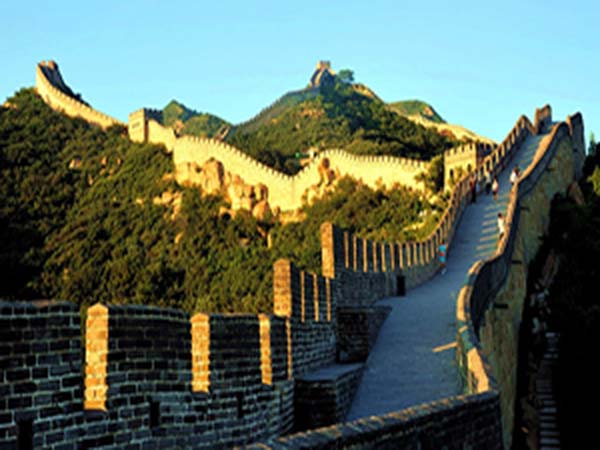
The Great Wall snakes through the countryside over deserts, hills, and plains for several thousand miles. At its closest point it is less than 40 miles from Beijing. The wall was created following the unification of China under Qin Shi Huangdi (221–210 BC). Despite impressive battlements, it ultimately proved ineffective; it was breached in the 13th century by the Mongols and again, in the 17th century, by the Manchus. Today, only select sections of its crumbling remains have been fully restored, with four main sites accessible from Beijing: Badaling, Mutianyu, Huanghua Cheng, and Simatai.
1. Badaling
The restored Ming fortification at Badaling is the closest section of the wall to Beijing. Although perpetually busy, it is possible to escape the crowds by walking along the wall; and the views are spectacular.
The wall is exposed to the elements: it is extremely hot in summer (bring sun cream and lots of water) and bitterly cold in winter. There are cafes and refreshment stands at each of the main four sites, although it’s better to bring your own food.
2. Great Wall Museum
Housed in an imitation Qing dynasty building at Badaling, the museum presents the history of the region from neolithic times, as well as detailing the construction of the wall. Admission is covered in the cost of your wall ticket.
3. Juyong Guan
This pass is on the way to Badaling. With un-scalable mountains on either side it is easy to see why the spot was chosen for defence. Early cannons remain on the ramparts. Also worth seeing are Buddhist carvings on a stone platform, or “cloud terrace,” in the middle of the pass.
4. Commune at the Great Wall
Within sight of the wall at Badaling, the Commune consists of 12 stunning, contemporary villas, each designed by a different, celebrated Asian architect. The complex operates as a hotel, but non-guests can drop by the restaurant for lunch.
5. Mutianyu
The appeal of Mutianyu lies in its dramatic hilly setting and less intrusive tourist industry. With a series of watchtowers along its restored length, the wall here dates from 1368.
6. Huanghua Cheng
On the same stretch of wall as Mutianyu, Huanghua Cheng is an exhilarating section of Ming fortifications that is far less developed than most other parts. The great barrier is split into two by a large reservoir. The crumbling masonry can be uneven, so you need to take care.
7. Simatai
The wall at Simatai has only been partially repaired, and so affords a more genuine impression of the original wall. It is very steep and hazardous here in parts, and can even be quite risky to navigate.
8. Jingshanling
The starting point for a 6-mile trek to Simatai, which because of the steep and stony trail usually takes around four hours. The views as the wall winds over sharp peak after sharp peak are fantastic, but you have to work for them.
9. Gubeikou
Lying farther west of Jingshanling, Gubeikou is a heavily fortified pass from where you can begin a 15-mile walk to Simatai. It is, if you are really fit, possible to do it in one day.
10. Shanhaiguan
This is where the wall ends (or begins), at the sea. East of town, the “First Pass Under Heaven” is a formidable section of wall attached to a gatehouse. It lies some 218 miles east of Beijing but it does make for a worthwhile overnight trip.
Most hotels are able to organize a trip to the wall, usually combined with a visit to the Ming Tombs. However, be sure to find out whether there are any unwanted diversions planned to cloisonne workshops, jade factories, or Chinese medicine clinics. Small groups can have a more personalized visit, and see the more remote parts of the wall, by hiring a taxi for the day from Beijing and sharing the cost.
Zhangmu (Dram) China Travel

The Friendship Highway drops 1,400m during the 30km of road between Nyalam and the border town of Zhangmu. The arid Tibetan plateau gives way to lush greenery and deliciously damp air. Nepalis complain about the cold, but you’ll be shedding layers if you’ve arrived from Lhasa. A tiny collection of wooden houses before the border opened in 1980, Zhangmu is now one of the wealthiest towns in Tibet, due to trade in gold, clothing, and footwear. Zhangmu stretches for several miles through a series of switchbacks toward the border. Buildings are referred to in this section as though you are facing downhill.
Tingri (Lao Dingri) China Travel

An impoverished settlement with a breathtaking view of the world’s highest peaks, Tingri is the favored starting point for those wishing to walk to Everest Base Camp, and a common overnight stop between Kathmandu and Lhasa. A row of white-tiled houses and shops to the west of town represents the Han section of the settlement. Magnificent views of Everest may be gained from the ruins of the late-18th-century Tingri Dzong, spread across a hill south of town.
Pelbar (Dingri) China Travel

Confusingly, there are three towns known as Dingri. The county capital town of Shelkar, 7km farther west from Pelbar (Dingri), is referred to as Xin Dingri (New Tingri). Tingri, the other base for treks in the Everest region, 60km farther west, is called Lao Dingri (Old Tingri). There is little of interest in Pelbar. Pick up your permit for the Qomolangma Nature Reserve at the Qomolangma Service Center, on your right, set off the road, just after the turnoff.
Gyantse (Jiangzi) China Travel

Presided over by the spectacular Gyantse Dzong, and once the third-largest town in Tibet, Gyantse is the only substantial settlement in the TAR to retain its vernacular architecture of sturdy two- and three-story farmhouses. Offering a rare and beautiful glimpse of Tibetan rural life.
Gyantse Dzong (Jiangzi Zong Shan)
Towering above the settlement, this awesome fortress immediately catches your eye as you approach Gyantse. It’s a stiff hike up, but views of Pelkhor Choede, the ancient alleyways, and the jagged surrounding peaks are breathtaking.
Pelkhor Choede (Baiju Si)
The once-mighty temple complex of Gyantse used to house several different orders under the one roof. While restoration is ongoing, only the main temple, a huge thangka wall, and Gyantse Kumbum stand intact. Many of the chapels in the main temple are locked; if you persist, one of the 30 remaining monks may open them. The different orders bequeathed different artistic styles, shown in the chapels of the second floor. To the right (east) is the bizarre Neten Lhakhang, decorated in Chinese style with leaping tigers and dragons, floating clouds, and pagodas, representing Manjusri’s Pure Land in Wutai Shan.
The nine-story Kumbum , the largest chorten in Tibet, towers to a height of 42m. The first five floors are four-sided, while the upper floors are circular, forming a huge three-dimensional mandala. Kumbum means “the hundred thousand images,” and while the actual number of Buddhist images is around one-third of that estimate, even the most dedicated pilgrim won’t have time to properly inspect all the chapels. They house the finest art preserved in Tibet. Vibrant color and a lively, naturalistic style characterize the murals. The mandalas of the upper levels are exquisite, though an extra fee may be required to gain access to the seventh through ninth floors. Bring a flashlight.
Sakya (Sajia) China Travel

This remote Tibetan township boasts one of the most magnificent and best-preserved monasteries in the TAR, and is the home of the Sakya school of Buddhism. Founded by Konchok Gyalpo in 1073, it is similar to the Kagyu order in being heavily influenced by Indian Tantric Buddhism, but it differs in that its lineage is hereditary, passed down through the Khon family.
Sakya Monastery (Sajia Si)
The massive 35m windowless gray walls of Lhakhang Chenmo tower above the village and fields on the southern bank of the Trum Chu. Completed in 1274, this monastery fort was largely funded by Kublai Khan.
Unlike the rich and confusing pantheon seen in most Geluk temples, most images in the Assembly Hall (Dukhang) are of the historical Buddha, Sakyamuni. You’ll need a flashlight to see the exquisite statuary and murals. Other great works include an image of the bodhisattva Manjushri, second from the right on the back wall, leaning gently to one side, suggesting a sympathetic ear to believers. Walk around the monastery’s walls, which offer fantastic views of the surrounding areas. Only 170 monks remain, but they’re a young, friendly bunch. They may show you the monastery’s greatest treasure — a white conch shell, said to have housed a very early incarnation of Sakyamuni. Mountains of white kata (silk cloths) give away its location. Just south of the monastery stands a modern-looking museum that is still awaiting its collection — ask at the monastery for the latest.
Maqin (Dawu) China Travel

Few capital cities are one-street towns, but Maqin, the capital of Golok Tibetan Autonomous Prefecture, is just that. Efforts to “settle” nomads are rarely successful, and the town has a Wild West ambience. Nomads wander around for a few hours, and then amble out again. North of town is a picturesque Mani temple, choked with tar-choks (prayer flags), and the bustling market to the left of the bus station is worth a look. But the main reason to come here is to visit Amnye Machen, Amdo’s holiest mountain.
Golmud (Ge’ermu) China Travel

Unless you’re heading to Lhasa from the Southern Silk Road, there is no reason to visit this place on the wild landscape of the Tsaidam Basin. Golmud used to be the only option for the overland journey to Lhasa, but these days you have the infinitely preferable option of passing straight through the town on the new Qinghai-Tibet rail line.
Xining China Travel

Once a key trading post on the southern Silk Route, Xining is perched on the northern edge of the Tibetan plateau and boasts a sizable Muslim population. A recent boom in the economy from the discovery of oil reserves and the city’s attempt to market itself as a “summer resort” with its cooler than-average temperatures has increased the supply of hotels and amenities the city has to offer. Still, there’s little of interest in the city itself, but it’s a useful base for exploring the Amdo and Kham regions to the south.
Dongguan Qingzhensi (Dongguan Mosque)
Located in the center of a bustling Muslim district, this is where some of Qinghai’s 800,000 Muslims gather for the call to prayer. The buildings here aren’t much to look at, but if you come during prayer times, you’ll get an interesting glimpse into the lives of Chinese Muslims. Behind the mosque, there’s a crowded produce market and next to the mosque are stores selling Muslim wares.
Kumbum (Ta’er Si)
Jesuit missionary Emmanuel Huc, who visited in 1860, recorded, “On either side of the ravine, and up the edges of the mountains, rise, in amphitheatrical form, the white dwellings of the Lamas, each with its little white terrace and wall of enclosure, adorned only by cleanliness, while here and there tower far above them the Buddhist temples, with their gilt roofs glittering with a thousand colors and surrounded by elegant peristyles . . .”
Qinghai Sheng Bowuguan (Qinghai Province Museum)
If you don’t have much time to travel the rural parts of Qinghai, this recently opened museum is definitely worth a visit for its collection of relics that includes Mongolian pottery, Tibetan mani stones (stones carved with religious script and images), and bronze coins from the Han dynasty. The permanent exhibition also features a display of traditional clothing and architecture from minority ethnic groups in Qinghai, including Tibetans, Mongolians, and Hui, and the lesser-known groups like the Tu and Sala.
Rebkong China Travel

Rebkong is at the center of a major revival in Tibetan art, particularly in sculpture and the painting of appliquéd thangkas (silk paintings). The town itself is drab; nearly all the sites of interest are located several miles north.
The main Geluk monastery of the region, Rongpo Gompa, is to the south of town. But the most popular outing for those interested in Tibetan art is a visit to the villages of Shang Wutun and Xia Wutun, located 6.4km north of Rebkong. The villages are filled with monks and laypeople turning out masses of Buddhist art for temples as far away as western Tibet. The monks from Sengeshong Yagotsang in the upper village are exceptionally friendly, and happy to show their work.
Yushu (Jyekundo) China Travel

Yushu is your best opportunity to visit a large, thriving Khampa town. Though named for the Jyekundo Gompa, which looms above the town, Yushu has always been more trading center than monastic town.
Religious paraphernalia—including bells, prayer wheels, incense, and chanting tapes — is sold alongside knives, snuff from India, and bundles of tea wrapped in bamboo. Prayer flags (tar-choks) handmade by printers from Dege, and tailor-made chubas (Tibetan jackets) make excellent purchases. Kham is renowned for its richly colored carpets, but many are inferior weaves from Sichuan. Better carpets are usually Nepalese imports, but the craft is being revived locally; a carpet factory opened in 2003, although it has yet to produce a carpet! To buy a Meiya rug, you’ll need to check out their shop in Xining.
Zhang Jia Jie China Travel

Zhang Jia Jie’s landscape might well have inspired the shamanistic poems of the classic collection Songs of Chu. Unlike most famous sights in China, the area remained remote and little visited until relatively late. To the ancients, that part of northwestern Hunan (at the southern periphery of the Chu Kingdom) was an inhospitable wilderness—mountainous terrain populated by wild animals. And unlike the sacred Buddhist and Daoist mountains, it did not draw pilgrims.
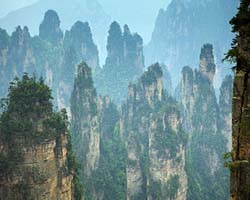
But that’s all changed. Zhang Jia Jie Scenic and Historic Interest Area (also called Wu Ling Yuan) became China’s first National Forest Park in 1983, and in 1992, its core zone was inscribed as a World Heritage Site. The natural beauty of the region—dominated by quartzite sandstone peaks and pillars — remains stunning and unusual; and opportunities to see rare plants and insects in this dense, subtropical forest still abound.
Zhang Jia Jie National Forest Park
Huangshi Zhai. At the first fork after the entrance to the park, take the left road; hike 2 hours to this former mountain stronghold that is 1,080m (4,542 ft.) high and affords a panoramic view of forested peaks and jagged sandstone pillars. A cable car also goes to the plateau. Another path that leads through beautiful jade-green forest and passes a tight cluster of sandstone columns is reached by taking the right road at the first fork. Follow the path along Jinbian Stream. At the next fork, either take the left to Mihun Tai (and return the same way), or take the more traveled right-hand path to Zicao Tan. From there, take the right-hand path at the next two forks to return to the entrance.
Yuanjiajie, located on the north of the park, is another scenic spot that shouldn’t be missed. Head to the right path of the park, where the Jinbian Si (Golden Whip Stream) starts. Follow the path; there is a small road going up to Yuanjiajie. The hike takes another 21?2 hours. Or you can walk farther to Shui Rao Xi Men (Stream Winding Around Four Gates). From there, take a bus to the Bailong Tianti (Bailong Tourist Lift), which runs 356m (1068ft) vertically. During 2-minute journey, you can enjoy the magnificent panoramic view of hundreds of sandstone pillars. After that, take a bus from Bailong Tianti to Mihuntai (the Platform of Lost Mind) of Yuanjiajie. The huge quartz sandstone mountain has breathtaking landscapes of sandstone pillars.
Nan Yue Heng Shan China Travel

Located on the southwestern bank of the Xiang River in the middle of Hunan Province, Nan Yue Heng Shan — known locally as Nan Yue (Southern Mountain) or Heng Shan — is one of the five sacred peaks (symbolizing the four directions and the center) of Daoism. It was believed that these peaks were supernatural channels connecting heaven and earth. For Daoists, mountains were the sites where qi (cosmic energy) was at its most refined; herbs and minerals—the ingredients of health and longevity elixirs—were found on mountains; and it was on mountains and in mountain caverns that seekers were most likely to find transcendent beings.
As far back as the 6th century, Nan Yue was also a place of Buddhist worship; and it is the birthplace of the Nan Yue school of Southern Chan (Zen) Buddhism, which got its start here in the 8th century.
Late summer and fall are the best times to visit. Locals warn visitors to resist the temptation of shortcuts on overgrown and little-used paths, where you’re likely to encounter snakes.
The best preserved and most famous of the mountain temples is Nan Yue Da Miao at the southern foot of the mountain. Originally built in the Tang dynasty (618 – 907), it was destroyed by fire a number of times. The present temple dates to the Qing dynasty (1644 – 1911). The main hall is noteworthy for its double roof, which is supported by 72 columns representing the inevitable 72 peaks of Nan Yue. Halfway up the mountain, past the cable car entrance, is the Daoist monastery Xuandu Guan. Here, worshipers light firecrackers, kowtow in front of the white marble statues of three Daoist Celestial Masters, or cast their fortunes by throwing two halves of a wooden oval on the ground. Eleven Daoist priests live in this monastery. Lodging is available for up to 3 days here. There is also a vegetarian restaurant.
Daoist and Buddhist monasteries and temples are scattered over the mountain. Most are small and worth a peek, but they don’t need lots of time. Zhurong Hall is at Nan Yue’s highest peak, Zhurong Feng, where the views are magnificent.
The Tibetan China Travel

Tibet may be the “roof of the world,” but it became that only recently, when the Indian subcontinent collided with the Eurasian landmass 35 million years ago. Prior to that, the Himalayas formed the seabed of the Tethys Sea. Mollusks are still found throughout the region.
Tibet is dominated by the vast, dry Tibetan plateau, a region roughly the size of western Europe, with an average elevation of 4,700m (15,400 ft.). Ringed by vast mountain ranges, such as the Kunlun range to the north and the Himalayas to the south, the plateau’s west side features high plains, and the north is dominated by the deserts of the Changtang and the Tsaidam Basin. China’s great rivers — the Yellow River and the Yangzi — rise in the east, carving out steep gorges. The greatest diversity in landscape, vegetation, and wildlife is found in the broad and fertile valleys of the Himalayas.
Travel in Tibet should not be taken lightly. There are wide variations in temperature throughout the day, and many visitors experience altitude sickness, particularly those who fly directly to Lhasa. The northern and western regions of Tibet are cold and arid, with an annual average temperature of about 0°C, while southern and eastern regions are warmer and wetter. Peak season runs from May to mid-October. Winter in Lhasa is cozy, but transport out can be difficult to arrange — the Friendship Highway from Nepal to Lhasa is effectively closed for the winter months. The trip has become a popular one among foreign travelers in recent years.
By the way, I plan to go to Tibet next week, and then go to Prague by air. I have already booked hotel in Prague. Prague is the most beautiful city of Europe. I plan to travel to there.
Wudang Mountain China Travel

Unlike Emei Shan, Qingcheng Shan, and Nan Yue Heng Shan, Wudang receives relatively few tourists, and it has preserved its temples and its Daoist tradition more successfully than the less-remote mountains. The price of preservation for the traveler is a longer journey and less-comfortable lodging. However, the mountain’s rugged peaks covered in old-growth forest, along with its ancient monasteries — some built to fit the contours of the cliffs, others to mirror them—are well worth the sacrifice.
Another name associated with these mountains is Zhang Sanfeng, the Daoist Immortal credited with inventing the discipline of taijiquan in the late 14th century. Though less well known overseas, Wudang’s “internal” form of wushu (martial arts) is as highly regarded as Shaolin Temple’s “external” form. Students come from all parts of China to study at the many martial arts schools in town and on the mountain.
The famous swords used in the Wudang style are for sale everywhere. The best times to visit are April through June and September through October, when the leaves turn as red as the gorgeous temple walls.
The entrance to the mountain is less than a mile east of Wudang Shan Town. Tour vans pick up passengers outside the railway station and drop them at the entrance of the mountain.
From there to the main temples and trail head is another 12km. The peak can be reached on foot in 21?2 hours up stone stairs. The views are magnificent. Save energy for the final very steep leg to the peak.
Best preserved from the Ming dynasty building boom is Wudang Shan’s Zixiao Gong (Purple Mist Palace), located on Zhanqi Peak (below the cliff Taizi Yan). This large, still very active monastery was built in 1413. Its striking red halls often bustle with priests and pilgrims. You may also come upon a taijiquan class practicing on one of the open terraces.
The most dramatic of the existing temples, Nanyan Gong (Southern Cliff Palace), is built into the side of a sheer cliff, recalling Northern Heng Shan’s Xuankong Si—another Daoist temple that seems to defy gravity. From Zixiao Gong, follow the trail up the mountain (southwest) to Wuya Ling; Nanyan is just after Nantian Men. Jin Dian (Golden Hall), which sits on Tianzhu Feng, highest of Wudang’s 72 peaks (1,612m high), is part of the 15th-century Taihe Gong (Palace of Supreme Harmony) complex. Its two-tiered roof, covered in gilded bronze, is, naturally, best viewed on a clear day when it sparkles. To reach Jin Dian from Nanyan Gong, continue up the path to Huanglong Dong (Yellow Dragon Cave). From here, both ascending paths lead to the Golden Hall. The steeper route is to the right through the three “Heaven Gates.”
Changsha China Travel

Changsha is another hazy, modern Chinese city. It is the capital of Hunan Province and gateway to one of the Five Sacred Mountains of Daoism and the gorgeous scenic area of the World Heritage Site, Wu Ling Yuan. It is also home to one of the most exciting tomb collections in China — the Mawang Dui, which dates from the Western Han dynasty.
Hunan Provincial Museum
Between 1972 and 1974, the family plot of the chancellor to the prince of Changsha (which was in the Chu Kingdom) was excavated at Mawang Dui in the eastern suburbs of Changsha. Of the three tombs — one each for the husband, wife, and son — only wife Xin Zhui’s tomb was left undisturbed. Inside her tomb and her son’s tomb were thousands of funeral objects and hitherto lost classics copied on silk. Among them are the earliest known text of the Zhou Book of Changes and two important versions of the Daode Jing (The Laozi). But the bulk of the manuscripts concern the quest for immortality through meditation, exercises, sexual practices, drugs, and alchemy. These rare records attesting to one family’s search for the Dao are invaluable for what they reveal about the actual practice of religion in the early Han dynasty.
Perhaps the most astonishing object discovered in the tombs was the well-preserved corpse of Xin Zhui herself—who, after all, did achieve immortality of a kind. At the time of her death, she was 50 years old, stood 1.5m tall, and weighed 75 pounds. Reading her litany of ailments and looking at the intact corpse, it would appear that 50 years of life took a far greater toll on her body than did 2,100 years of death.
Lei Feng Memorial
The selfless soldier whose only ambition was to be “a little screw that would never rust in the revolutionary machinery” ended up getting a whole memorial to himself, not to mention the Lei Feng Hospital, the Lei Feng Hotel, and the big statue of Lei Feng that flanks the street to the museum. Unfortunately, there are no English signs in this monument to a past era, but much of the collection is selfexplanatory. It includes propaganda posters that trace the life of Lei Feng and his family members, some obviously retouched photographs, and a number of Lei Feng’s personal effects. Give yourself about 45 minutes to an hour here.
Wuhan China Travel

Wuhan is primarily an industrial and business center. Were it not for the fact that many of the Three Gorges tours traditionally begin or terminate in Wuhan, few Western tourists would ever make it here. However, trisected by the Yangzi River and its longest tributary, the Hanshui, and dotted with a hundred-plus lakes and scores of parks, this city of 4.8 million urban residents is an agreeable place to spend a couple of days. Three districts—Wuchang, Hanyang, and Hankou—which used to be separate cities, comprise present-day Wuhan. Avoid summers when the city inevitably lives up to its reputation as one of China’s Three Furnaces. Wuhan is also the gateway to the Daoist mountain Wudang Shan.
Guiyuan Buddhist Temple
Best known for its hall of 500 gilded luohan (enlightened disciples), each in a different posture and having distinct features, this temple was founded in the mid–17th century by the monk Bai Guang. The luohan were sculpted between 1822 and 1831. Men proceed to the left and women to the right, counting one luohan until the number equals their age. In the sutra library at the far end of the complex is a pretty jade Buddha with Indian influence that dates from the Northern Wei dynasty.
Hubei Provincial Museum
Visitors to this museum can see some of the actual instruments on which the music was played. In addition to an ensemble of ancient musical instruments, the tomb included coffins, gold and jade decorative items, weapons, and impressive bronze- and lacquerware from China’s Warring States period (474–221 B.C.). The centerpiece of the exhibition is a huge set of 65 bronze chime bells, said to be the heaviest and possibly oldest extant musical instrument in the world. Inscriptions on the bells and hooks that hold them constitute the earliest known work on musicology. To give visitors an idea of how the bells were played and how their pentatonic scale sounded, musicians give an excellent 20-minute performance on classical instruments, which include replicas of the bronze bells.
Middle Reaches of the Chang Jiang China Travel

The following liners have the best English-speaking guides and the best ships. And after years of experience with foreign passengers, most have removed from their itineraries excursions that require a thorough familiarity with characters and events of the Three Kingdoms in order to enjoy them. Take advantage of off-season rates; book and buy in China; compare prices; bargain; and ask what the excursions are. The prices quoted here are rack rates, but 50% discounts are standard even during high season. The cruising high seasons are April, May, September, and October. Shoulder seasons are late March, June, July, August, November, and early December. Some cruise ships offer specials in December, January, February, and March.
Orient Royal Cruises
Until the appearance of Viking River Cruises, Orient’s East King and East Queen were arguably the plushest ships on the Yangzi — built to five-star standards and tied with the Yellow Crane for the best food. Their cruise directors, both from the Philippines, do a superior job of attending to passenger needs and special requests, and their Chinese river guides deliver expert commentary in well-spoken English. Standard cabins have twin beds, a desk, and small fridge. Orient Royal offers 4-day route from Chongqing to Yichang and 5-day, from Yichang to Chongqing.
Presidential Cruises
Presidential, run by CITS, has five ships currently operating on the Yangzi, imaginatively named MV1, MV3, and so on. The Yangzi Paradise (aka MV6) is built to China’s four-star standard, and its cabins aren’t as spacious as those of Viking and Orient Royal, but the ship is attractively appointed and well-staffed with an English-speaking crew. While the Yellow Crane lacks the slick promotion of Victoria and Orient Royal, the ship itself serves better food, is more luxurious than Victoria’s ships, and very nearly meets the five-star standard of the East King and East Queen. Standard rooms are comparable in size and furnishing to those in Victoria Cruises’ fleet.
Victoria Cruises
Based in New York, this is one of the few Western-managed lines. At one time, Victoria had the most luxurious liners on the Yangzi. While they still offer first-rate cruises with some of the best English-speaking cruise directors and river guides, other cruise lines equal or surpass their ships’ cabins, kitchen, and facilities, and are equally well staffed. Standard cabins have twin beds and writing desk, but are slightly smaller than Orient Royal’s East King and East Queen.
Viking River Cruises
Not only the most recent cruise line to start plying the Three Gorges, Viking’s two liners, the Viking Century Sky and the Viking Century Star, comfortably float above the competition as the top way to see the river. Effortlessly fivestar, every room is spacious and tastefully appointed with blond woods. The food is excellent and plentiful—to the extent that it sometimes feels as though you are living from meal to meal—and the staff has a working grasp of English and is extremely
friendly. Although the Viking’s main route runs between Chongqing and Yichang (3–4 nights), the company also offers trips that go all the way to Mountainghai (9 nights). The cost of the cruise covers daily (but optional) shore visits, including the Three Gorges Dam, the Lesser Three Gorges, and Shi Bao Zhai Temple. However, the day trips are little more than a distraction from the cruise itself. Viking cruises are usually sold as part of package tours visiting China’s other key tourist meccas: Xi’an, Beijing, Hong Kong, and Mountainghai.
The Top Excursions
One of the best excursions is to Shi Bao Zhai (Stone Treasure Fortress). This squareedged red pagoda built in the 18th century hugs the cliff and is an elegant vision from the river. The climb up its 12 narrow staircases is only difficult when other tour groups are pressing from behind or blocking the way in front. Since the descent is down a back staircase, just let them all go ahead. Inside, look for the two “magic” holes. The first is the Hole of the Greedy Monk. As the story goes, when monks lived in the tower, the hole spouted just enough rice for their daily rations. One monk, thinking he’d like rations to sell in the market, tried to make the hole bigger. His avarice shut the source for good. Of the second hole, it is said that if you drop a duck down it (Duck Tossing Hole), within seconds you’ll see the duck floating far below on the river.
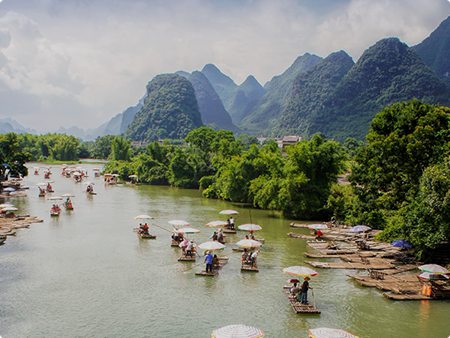
For impressive scenery, the half-day trip up Shennong Stream (near Badong) is the best of the excursions. Cruise passengers board a ferry that takes you to Shenong Xi. There, you climb into “peapod” boats that are rowed and pulled upstream by trackers (in shorts and handmade sandals), most of whom are farmers in the off season. Each boat has a female guide whose English isn’t always up to the task, but she makes up for it by singing a Tujia minority song for the group on the return trip. If the trackers are in the mood, one or two will join in. The scenery on this narrow stream is probably closer to what most travelers expect of the Three Gorges. Towering cliffs rise on either bank, and the water is crystal clear. On rare occasions, passengers catch sight of monkeys along the cliffs. The trackers used to go only far enough to glimpse the first hanging coffin, but now that the water level has risen, they may continue farther (though time is a factor, too). Depending on the ship and water conditions, you may go instead to the small gorges of the Daning River (near Wu Mountain), where the scenery is equally beautiful and monkeys are more often sighted.
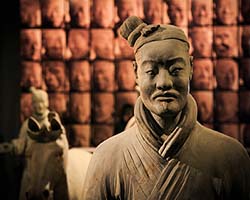
Whether or not you have any interest in engineering or construction, the sheer immensity of the Three Gorges Dam Site at San Dou Ping makes this worth a visit. Not only is it a unique photo opportunity, its monumental size lends it the visual power of the Great Wall or Xi’an’s Terra-Cotta Warriors. The luxury cruise ships usually include it on their itineraries, while local tourist ferries don’t.
Dazu (Dazu Buddhist Grottoes) China Travel

Among the most impressive and affecting artistic monuments that have survived through the ages are the extensive Buddhist cave paintings, sculptures, and carvings of Datong, Luoyang, Dunhuang, and Dazu. Of the four sites, Dazu’s stone carvings, executed between 892 and 1249, are among the subtlest and most sophisticated, and worth going out of your way to see.
An unusual aspect of Dazu is that in addition to Buddhist images, it contains Daoist and Confucian statues and themes—not only in separate areas but, in rare instances, in the same cave. Initiated outside the monastic establishment, the Dazu carvings also commemorate historical figures as well as the project’s benefactors, including commoners, warriors, monks, and nuns. In addition to what these carvings reveal about artistic advances made from the late Tang to the late Song, the garments and ornaments, along with garden and architectural settings, shed much light on everyday life in ancient China.
Of the six largest sites scattered around the county seat of Dazu, two are most worth a visit — Bei Mountain, completed in the late Tang dynasty (618 – 907); and Baoding Mountain, started and completed in the Song dynasty (960 – 1279). If you have time or interest for only one, make it Baoding Mountain.
Baoding Mountain
Carvings of the cliff-side grottoes known as Da Fo Wan (Big Buddha Cove) were initiated and directed by Zhao Zhifeng, a self-styled Buddhist monk whose brand of Esoteric Buddhism incorporated current religious ideas and popular beliefs. The carvings are a series of instructive and cautionary scriptural stories arranged in order around a U-shaped cove with interludes of inscriptions and caves devoted to Buddhist deities. At the bottom curve of the U is a massive carving of a reclining Sakyamuni Buddha as he enters Nirvana. It is just one of the many imposing sculptures at Baoding Mountain. Others that should be noted include the stories of parental devotion and Sakyamuni’s filial piety. Local guides usually say these attest to the merging of Confucianism and Buddhism during the Song. These carvings are first and foremost works of art. The last story in the cove depicts the taming of a water buffalo and is meant to be a metaphor for taming the mind in meditation. One of the most accomplished carvings in this cove is no. 8, the Thousand-arm Avalokitesvara (aka Guanyin), said to be the only Thousand-arm Avalokitesvara that really has a thousand arms (1,007, actually). Remarkably, each of its hands is in a different pose. Expect to spend 11?2 to 2 hours if you’re exploring on your own, another hour if you’ve hired a guide.
Chongqing China Travel

In 1997, Chongqing became the fourth city to achieve the status of municipality (after Beijing, Tianjin, and Mountainghai). With summers so hot it’s been dubbed one of China’s Three Furnaces, and streets so steep that no one rides a bike, terrain and weather were once its chief claims to fame. Now, this cliff-side city overlooking the confluence of the Chang and Jialing rivers has much to boast about. Chongqing is the biggest metropolitan area in the world (surpassing Tokyo); it’s got the world’s biggest dam site downriver; and it’s in the midst of building the world’s tallest skyscraper (the Chongqing Tower).
Chongqing’s pleasures are modest, but there’s enough here to make a 2-or 3-day stay enjoyable. The city is also just a 2-hour bus ride from the Buddhist Grottoes at Dazu.
Artists’ Village (Huajia Zhi Cun)
Even if you’re not prepared to spend lots of money, the vine covered studios and residences, connected by stone walkways and surrounded by small gardens, provide a more interesting respite from the traffic than just another city park. Each artist has a small studio, and visitors roam the grounds from one to the next.
Chongqing Zoo (Chongqing Dongwuyuan)
If you’re going to Chengdu and have time to visit one of the panda breeding centers (in the northern suburbs or at Wolong), then don’t bother with the Chongqing Zoo. But if this is your only chance to see pandas, consider spending part of a morning at the giant panda and red panda enclosures. To get to the red pandas, go to the left of the English introduction board and down the stairs. The outdoor enclosure has a half-dozen extremely active small red pandas.
Ciqikou
This small neighborhood with cobblestone streets in the Shaping District is popular with travelers who have a few days in Chongqing; however, it has somewhat turned into a theme park. The two main streets — lined with modest eastern Sichuan – style buildings — form a T from the entrance. Shops on the first street sell paintings, batik clothing, and other items geared mainly for tourists.
At the top of the T, a right turn leads to the wharf. Along the way are several teahouses and restaurants. One teahouse, Qingdai Minju, has a nice courtyard just off the main thoroughfare where you can enjoy performances on traditional Chinese instruments. Farther along at Lingyun Minyue in another tearoom, a small ensemble of musicians gathers most days to play traditional music.
Sanxia Bowuguan (Three Gorges Museum)
Originally called the Chongqing Municipal Museum, this museum moved to its more modern and spacious location mid-2005. First is its lovely collection of Tang and Song heads carved out of stone. Most are of Buddha, Guanyin, and various bodhisattvas, but what distinguishes them are their human rather than heavenly miens. A fine collection of terra-cotta sculptures from an Eastern Han tomb is also on the display. Discovered in Chongqing north of the Yangzi, they are small, whimsical figurines of musicians, dancers, singers, and storytellers — a lively group to spend eternity with. The museum also boasts collections that stretch as far as the Mountaing dynasty (ca. 1600 – 1045 B.C.). Of particular interest are the paulownia-wood “boat coffins” of the ancient Ba culture.
Jiuzhai Gou (Valley of Nine Villages) China Travel

Photographs of this World Heritage nature site look surprising. The lakes are “jewel-like,” the pools are “limpid,” the fall colors are “flaming.” For sheer scenic beauty and variety, Jiuzhai Gou has it all: dense forest, green meadow, rivers, rapids, ribbon lakes in various shades of blue and green, chalky shoals, and waterfalls of every kind — long and narrow, short and wide, terraced, rushing, and cascading. Of cultural interest are the six remaining Tibetan villages of the original nine from which this valley gets its name. Some 1,000 Tibetans, of 130 families, live within the site. And to facilitate sightseeing, so-called “green buses” run along special highways within the valley delivering passengers to various scenic spots. Another aid to tourism is a network of raised plank paths and wooden pavilions that afford visitors a proximity to natural wonders that would otherwise be unapproachable.
The best time to go is from July to November, before the weather cools down significantly. Even at the height of summer, have a jacket on hand for rain and sudden temperature drops. To avoid crowds and get the best hotel discounts, come midweek. Busy times are Chinese New Year, Labor Day week (first week of May), and National Day week (first week of Oct). Some hotels close between November and March.
With 2 days, using a combination of shuttle bus and walking, you can see all five scenic zones. For a more relaxed pace or extended walking, add a third day. Of the scenic zones, the two with the highest concentration of natural wonders are Shuzheng Jingqu and Rize Jingqu. Each zone covers several miles and has wooden planks or stone paths that lead the visitor right up to waterfalls, across shoals, or to the edge of turquoise waters. These can be done in a day if that’s all you have, or they can be spread over 2 days, leaving half of each day for wandering in the less-visited areas beyond Panda Lake (Xiongmao Hai) to the right or beyond Wucai Chi (Five-color Pool) to the left.
Wolong Nature Reserve China Travel

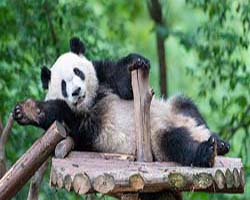
Established in 1963, Wolong isn’t the only place to see giant pandas, nor is it the most convenient. But scientists here have made more advances in artificial breeding and raising pandas in captivity than anywhere in the world. The Wolong Breeding Center currently has about 30 giant pandas ranging in age from newborn to adult, and it is almost always possible to see panda cubs here.
Another aspect of Wolong’s appeal is location. Situated in the high, densely forested mountains between the Sichuan Basin and the Qinghai-Tibetan Plateau, the area has a diverse topography that supports a broad range of vegetation and animal life — not that you’re likely to see any of the panthers, macaques, white-lipped deer, or takins purported to live on the reserve. Nonetheless, the area is unspoiled and the flora is magnificent (and much more apparent than the fauna). You also have the chance to climb a mountain sans stairs—good news to some.
The best months to visit are May, August, and September. Allow 2 days to see the sights; add another day or two if you want to hike the several marked trails.
Most tourists to Wolong come for the Giant Panda Protection and Research Center in Hetao Ping, which is good enough reason, but there are so few chances in China to enjoy nature, free of crowds, that you may want to do some hiking while you’re here. If so, be prepared for temperature fluctuations and rain, especially in summer. Also consider hiring a guide at the Panda Museum if you plan to hike very far. Trails can be faint and muddy, and descents at times slippery (the downside of not having stairs).
A viable 2-day plan is to arrive in Shawan in the afternoon. After checking into your hotel, visit the museum for an hour or so and roam around the very small town before dinner. The next morning, get up early and visit the breeding center in Hetao Ping. Spend the late morning and afternoon hiking. Depart the next morning.
Baohu Daxiongmao Ziran Zhongxin (Giant Panda Protection and Research Center) The pandas are housed either in enclosures or in seminatural habitats—if they’re being prepared to return to the open reserve. Unfortunately, Wolong has had less success with reintroducing pandas to the wild than with captive breeding, so the majority of pandas are in large enclosures that include an indoor room and an outdoor courtyard. For bird’s-eye views of the pandas in open-air pens, an elevated trail runs along an adjacent cliff face above the enclosures.
Opposite are the Lesser Panda Enclosures (Xiaoxiongmao Shengtai Guan). Although the smaller red pandas — related to the raccoon — don’t get nearly as much press, they are undeniably appealing and usually more playful. The best time to visit is between 8:30 and 10:30am, while the pandas feed.
Qingcheng Mountain China Travel

Qingcheng Mountain offers solitary climbing on stone steps and wooden paths through dense forests of pine, fir, and cypress. Along the way are caves, ponds, a pedestrian bridge, ancient ginkgoes, and 16 Daoist and Buddhist monasteries housing statues dating from as far back as the 6th century.
More important, Mount Qingcheng is considered the birthplace of China’s only indigenous religion, Daoism — that is, “organized” Daoism, which gelled a half century after Laozi. It was to this mountainous part of western Sichuan (the Shu Kingdom) that the pilgrim Zhang Daoling came to cultivate the Dao. Some years later, in A.D. 142, the deified Laozi appeared at Heming Mountain (just south of Qingcheng) and made Zhang the first Celestial Master.
Less awe-inspiring than other World Heritage mountains, Qingcheng Mountain nevertheless makes an invigorating day trip from Chengdu. If you wish to stay longer, there is lodging in monasteries and inns on the mountain. Escape crowds and high guesthouse rates by coming midweek. Summer is considered the best time to visit, but it’s also the busiest, as Chengdu residents flee the city heat.
From the entrance, follow the main trail, keeping to the left. Pass Yile Wo (Nest of Pleasures); continue to Tianshi Dong (Celestial Master Cave). This is the core site of Qingcheng Mountain. The six surrounding peaks were to act as natural inner and outer walls that would protect the area from the world of men. A temple first built in 730 now stands in the spot where Zhang Daoling is supposed to have built a hut for himself. It’s said that he planted the ancient ginkgo tree that grows here — which would make it about 1,700 years old. Continue on to Zushi Dian (Hall of the Celestial Master Founder) and Chaoyang Dong (Facing the Dawn Cave). The narrow section of path between these two sights passes through beautiful dark forest and thick undergrowth. Continue on the path; after veering right and passing a couple of viewing pavilions, it leads to Mountaingqing Gong (Temple of Highest Clarity). First built in the 4th century, the present building is considerably newer. The tearoom here also sells snacks. From here to the summit at Laojun Ge (Lord Lao Pavilion) is a short but steep climb.
Le Shan (Le Mountain) China Travel

The carved stone statue of the Great Buddha (Da Fo) at Le Shan is one of Sichuan’s top tourist destinations, but whether it’s worth a day in a tight travel schedule is debatable. The thrill of Le Shan is in your first sighting of the Great Buddha. Whether that’s from the top looking down, from a boat looking straight up, or from the path of nine switchbacks (Lingyun Zhandao) looking somewhere in between, the moment it dawns on you that the large, gracefully curved, stone wall (for example) that you’re looking at is actually the lobe of a colossal ear, and that the ear is only a small slice of a well-proportioned giant—that moment is thrilling. But after you’ve marveled at the Great Buddha from all the various angles, what’s left to explore is not much more than an overcrowded theme park.
The town of Le Shan is not without charm, but with a 2,300-year history and situated as it is at a confluence of rivers, it should offer much more than it does. I suggest you skip the town and go directly to the mountain. Le Shan is best done as a day trip from Chengdu or as a stopover on the way to Emei Shan from Chengdu. Two to 3 hours is plenty of time to enjoy it. It’s open from 7:30am to 7:30pm, May through September; and from 8am to 6pm, October through April.
On foot from the entrance, it’s a 10-minute walk along a stone path to the Great Buddha. When the road forks into two staircases, take the staircase to the right. This leads around the side of the mountain looking back at the town. It also affords a panoramic view of the three converging rivers, the Min Jiang, the Dadu He (Chang Jiang), and the Qingyi Jiang. The path leads to a terrace and souvenir area beside and around the back of the Buddha’s head. From here you can look into his ear and over his shoulder. For a variety of views of Da Fo, descend the zigzag staircase called Jiuqu Zhandao (Path of Nine Switchbacks) by the statue’s right side. This leads to a large viewing platform that puts visitors at toe level.
Da Fo (The Great Buddha)
At 71m tall, Le Shan’s Da Fo — hewn out of a mountain—is similar in size, subject, and artistic medium to the recently demolished Bamiyan Buddhas in the Hindu Kush. Carved some 500 years later, between 713 and 803, Da Fo is one of the world’s largest stone sculptures of Buddha. It was the inspiration of the Buddhist monk Hai Tong, abbot of Lingyun Monastery, who hoped that a giant Maitreya Buddha (Future Buddha) overlooking the water might subdue floods and violent currents. In 1996 it was added to UNESCO’s World Heritage List, and in 2001 large-scale repairs were started: The Buddha’s head, shoulders, and torso were cleaned up and repaired and a cement coating (added in modern times) was removed. The next stage took 10 months and was completed in 2002. Repairs were made to the statue’s ingenious, hidden drainage system that slowed, but could not stop, erosion; and cracks as deep as 4m in the base of the Buddha were
filled in. For an idea of how massive this statue is: Each eye is 3m long; each ear 7m; and his middle finger is 8m long. His head is covered with 1,021 buns of coiled hair, carved out of tapered stone blocks that fit into his head like pegs in a cribbage board.
Wuyou Hill
After viewing the Great Buddha, there isn’t a lot more to do, except stroll the park grounds and enjoy the views. To reach the adjacent southern hill, Wuyou Hill, cross the Haoshang Da Qiao footbridge on the south side of the Great Buddha. The plain, six-hall monastery by the same name, built in the Tang dynasty and rebuilt many times since, sits atop the hill. The Luohan Tang contains an army of terra-cotta arhats, each in a different pose. Most impressive is the view of the rivers from the top of the complex.
Emei Mountain China Travel

Emei means “lofty eyebrows,” but it’s also a pun on a poetic expression referring to the delicate brows of a beautiful woman. The mountain was named for two of its high adjacent peaks, whose outlines, according to 6th-century commentary on the “Book of Waterways,” did indeed conjure the image of two long, thin, graceful eyebrows.
Altitudes on the mountain range from 500 to 3,099m at the Wanfo Ding summit. Not surprisingly, average yearly temperatures vary significantly from one part of the mountain to another. In the subtropical zone at the bottom, the average is 63°F; at the summit, 37°F. Bring layers of clothes, and adjust them as you climb and descend. The best months to visit are late August through early October. The busiest months are July and August. Avoid national holidays.
There are two main hiking routes up Emei Shan to the Jin Ding summit, and two involving bus and/or cable car. Both hiking routes follow the same path from Baoguo Si (at the entrance) to Niuxin Ting. At Niuxin Ting, they split into a higher and a lower trail, which meet up again at Xi Xiang Chi, where they merge into a single path that leads to Jin Ding Peak. Since there are 80km of trails to the peak, a combination of hiking, buses, and cable car is recommended.
You can take a bus from Baoguo Si to Leidong Ping; from there, take a cable car to the top. Buses travel between Baoguo Si and Leidong Ping all day. The trip each way takes 2 hours. The cable car runs the 500m leg between the last parking lot, at Jieyin Dian (next to Leidong Ping), and Jin Ding (Golden Peak).
An option is to take the bus as far as Wannian Cable Car Station (Wannian Chechang). Begin your trek there or take the 8-minute cable car ride to Wannian Si and start climbing from there. All roads lead to Jin Ding, but the highest peaks are Qianfo Ding and Wanfo Ding. These can be reached by a monorail that runs between Jin Ding and Wanfo Ding. The round-trip takes 20 minutes
Chengdu China Travel

Ask a resident of Beijing or Shanghai what to do in Sichuan’s capital of Chengdu, and 9 times out of 10 they’ll tell you to drink tea and eat hot pot, such is the city’s reputation as a culinary capital that knows how to take it easy. Indeed, Chengdu’s cuisine is irresistible and tea drinking is a custom that took hold here 1,300 years ago and never let go. Like so many cities in central China, Chengdu has a pretty little river running through it. The narrow Fu He and its southern tributary form a sort of moat around the city, sections of which are lined with attractive restaurants and teahouses. The city is also in the midst of a building boom.
Chengdu is the gateway to scenic Jiuzhai Gou, the Buddhist mountains of Emei Shan and Le Shan, and one of the most important panda breeding centers. It’s also a traveler’s haven and a place to gather information between trips. People are friendly and the pace unrushed. And because Chengdu is one of the few cities with daily flights to Lhasa, many travelers come here to arrange transportation to Tibet.
The best way to enjoy Chengdu is to take long walks or cycle through the city, relax in a few teahouses and hot pot restaurants, and spread your visits to the best sights over a few days—or longer if you’re using Chengdu as a base from which to visit outof-town attractions.
Much of Chengdu’s Tibetan community lives southeast of the Wuhou Temple, and the area around the Southwest Minority Nationalities College and the Tibetan Hospital is interesting for its bookstores, Tibetan shops, and people. Wuhou Ci Heng Jie, in particular, has lots of shops selling Tibetan and minority goods. Have lunch at Xizang Fengqing Wu.
Qingyang Gong (Green Ram Monastery)
Directly west of the city center, this Daoist monastery is culturally and historically the most important sight in the city. It’s said that at Qingyang Fair (its first incarnation), Laozi attained immortality. And it was here that he revealed the Daode Jing (Classic of the Dao) to Yin Xi, frontier guardian at the Hangu Pass and last man to see Laozi before he left the world of men for Mount Kunlun, gateway to the Western Paradise. Today Qingyang Gong is one of the most active and important Daoist monasteries in China. Among its treasures, of greatest historical significance is a set of rare and elegant pear-wood printing plates of abstracts of scriptures in the Daoist canon. The grounds contain six halls on a central axis, a room for printing Daoist texts that stands to the east, and a room for worshiping Daoist sages that stands to the west. The Hall of Three Purities (Sanqing Dian) is the monastery’s main building, but the most emblematic has to be the Bagua Ting (Pavilion of the Eight Trigrams). This octagonal building sitting on a square pedestal (symbolic of the earth) rises 20m and has two flounces of upturned roofs covered in yellow, green, and purple ceramic tiles. Between the roofs, each facet of the octagon has at its center a plaque of the eight trigrams set off by a pattern of swastikas, symbolic of the sun or the movement of fire. The 81 carved dragons are said to symbolize the 81 incarnations of Laozi, but the number has closer associations with Chinese numerology and the belief in nine as the most “accomplished” of numbers. A bookstore in the Hunyuan Dian sells souvenirs alongside Mao bookmarks, Daoist study guides, and a fortunetelling manual called “Unlocking the Secrets of the Book of Changes.” If you buy one of the likenesses of Laozi that comes in a cloth envelope and hand it to the Daoist priest behind the counter, he’ll burn incense over it to kaiguang or “open its light.”
Sichuan Daxue Bowuguan (Sichuan University Museum)
Construction of a new provincial museum is underway, but it will be hard to match Sichuan University’s fascinating, well-presented collection, which includes Han and Tang dynasty Buddhist carvings; important Daoist documents, ritual instruments, talisman blocks, and clothing worn by shamans from the Eastern Han dynasty (25–220) to the Qing dynasty (1644–1912); bronzes from Ba and Shu cultures; a shadow puppet theater; and an ethnology collection featuring artifacts from a dozen central China minorities. Rarely are costumes displayed in such a dignified manner and without mannequins.
Xiongmao Jidi/Daxiongmao Fanzhi Zhongxin (Panda Research Base/Giant Panda Breeding Center)
This research base, which has elements of a veterinary lab, a park, a panda habitat, and a zoo, is one of the best places to see giant pandas. The much more wild and natural Wolong Nature Reserve would be better, but — except in its panda enclosures — panda sightings are few and far between. The stated purpose of the breeding center is to increase the captive population of pandas in order to reintroduce some to the wild. The grounds of the research base, covered with trees, flowers, and 14 species of bamboo, are lovely and, at the very least, provide a pleasant escape from the noise and congestion of Chengdu proper. As you follow pathways through the reserve you may see not only giant pandas but red pandas (closer to a raccoon than a panda), black-necked cranes, and white storks. You might also run into visiting field researchers. Your best chance of seeing pandas is at feeding time, 8:30 to 10am, although a few, mostly those for breeding, are in cages. Ask if there are cubs around — a mother panda with babe in arms is a sight not to be missed. Allow an hour to get to the base, two to stroll the grounds.
?